

This post contains affiliate links. When you click and make a purchase, TenaWorks may earn a commission at no extra cost to you. As an Amazon Associate I earn from qualifying purchases. See our affiliate disclosure for details.
Peptides are enjoying a run that retinol had fifteen years ago, and the pitch is appealing enough that it deserves close examination: all the collagen benefits, none of the peeling. If that were actually true, no one over 40 would put up with retinol’s adjustment period again.
It’s partly true. Marketing claims tend to amplify the facts, and the difference comes down to the amount of evidence that’s available about each ingredient and how much of the ingredient reaches the layer of skin where collagen is actually made.
Dr. Danilo Del Campo of the Chicago Skin Clinic draws the line where the research does. Retinoids, he notes, “have decades of research to back up their efficacy.” On peptides he is more measured: “The exact methods by which various peptides impact skin cells at the molecular level is not entirely clear,” and “the long-term impact of peptide usage lacks comprehensive documentation.”
Still, peptides do things retinol can’t, particularly for skin that is not able to tolerate a retinoid. But choosing between them means knowing what each one has actually been shown to do. Let’s start there.
The Quick Version
Retinol has the strongest evidence base of any over-the-counter anti-aging ingredient, works on wrinkles, texture and pigment at once, as long as you can tolerate the first several weeks of dryness. Results are documented from twelve weeks and continue past six months.
Peptides are gentler, usable morning and night, and have proven but narrower evidence — strongest for the collagen-signaling peptides, weakest for the “Botox in a bottle” ones. Most peptide molecules struggle to reach the dermis at all, and this is the limitation the category does not advertise.
If you can tolerate a retinoid, use one. Add peptides alongside it rather than instead of it.
If you cannot — reactive skin, rosacea, pregnancy, or four failed attempts — peptides are a legitimate second choice.
What retinol has actually been shown to do
Retinol is vitamin A. Once it penetrates the skin it converts, in two steps, to retinoic acid, which binds receptors in skin cells and changes what those cells do — accelerating turnover in the epidermis and switching collagen production back on in the dermis.
The trial record is unusually good for a cosmetic ingredient. In a randomized, double-blind, vehicle-controlled study, 0.4% retinol lotion applied up to three times weekly for 24 weeks produced significantly greater improvement in fine wrinkling than the inert vehicle. Biopsies from the treated skin showed increased glycosaminoglycan expression and increased procollagen I, meaning the researchers could see the mechanism, not merely the outcome (Kafi et al., Archives of Dermatology, 2007). The average participant was 87 years old, which makes the result more impressive rather than less — this was skin with decades of accumulated damage.
Use these two figures to set your expectations. Retinol is roughly 20 times less potent than prescription tretinoin, because your skin has to do the conversion itself and the enzymes that perform it are limited (Mukherjee et al., Clinical Interventions in Aging, 2006). And the earliest controlled trial of a retinol formulation found significant improvement in fine wrinkles at twelve weeks — not at three.
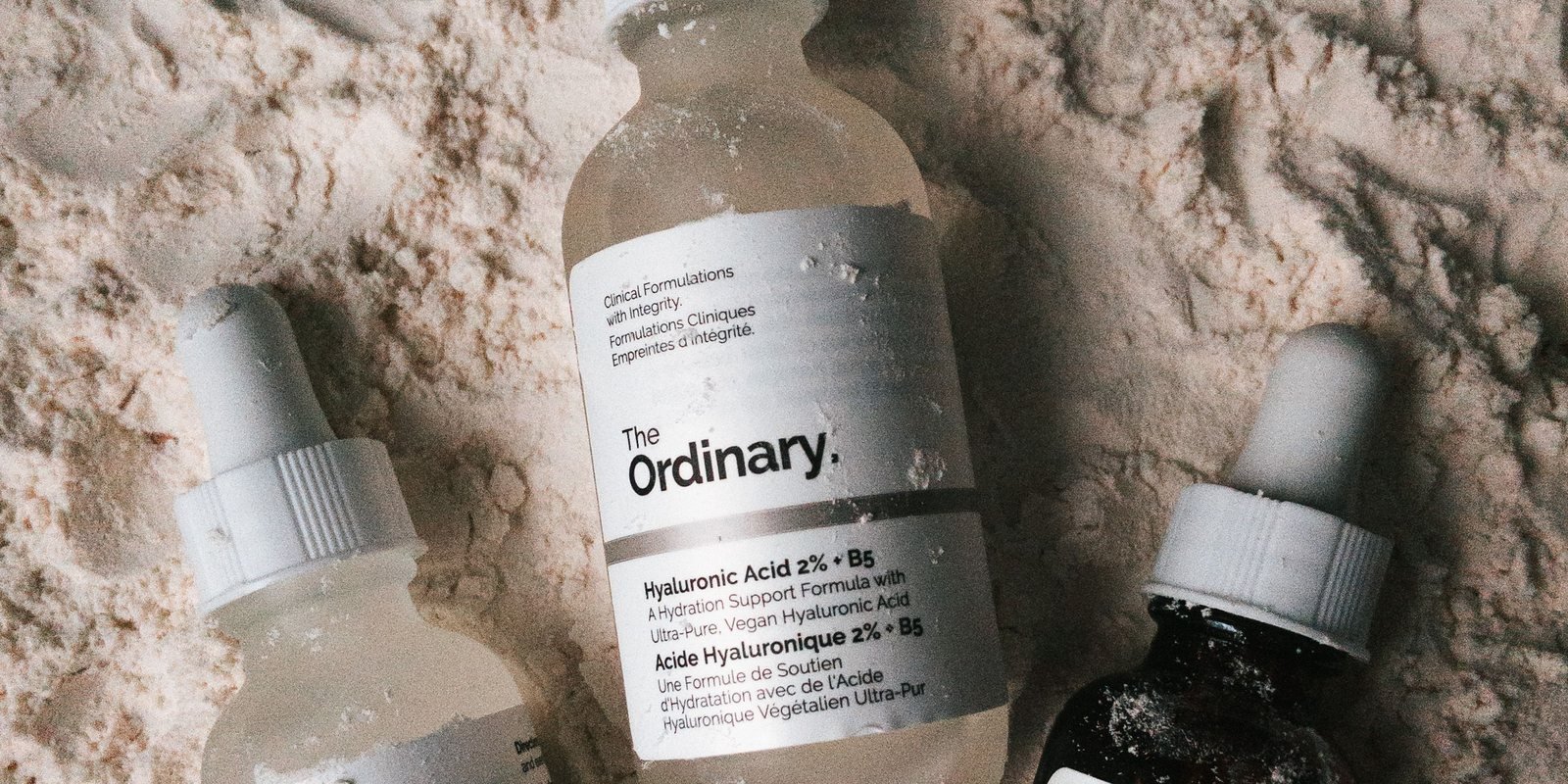
What peptides actually are
Peptides are short chains of amino acids. Proteins like collagen and elastin are long chains of the same things, which is where the marketing term “building blocks” comes from — although applying a peptide to your face does not supply building material any more than mailing someone a brick builds a house. What the useful ones do is signal.
Dr. Lauren Fine explains: “Collagen and elastin are essentially what gives skin structure, support and its ability to ‘bounce back’.” Dermatologists generally sort cosmetic peptides into four groups — signal, carrier, enzyme-inhibitor and neurotransmitter — and the evidence behind them is very unevenly distributed.
Signal peptides have the best case. Palmitoyl pentapeptide-4, sold as Matrixyl, mimics a fragment of type I procollagen and prompts fibroblasts to make more collagen. A double-blind, randomized, split-face study published in the International Journal of Cosmetic Science found significant reductions in wrinkle depth with twice-daily application over eight weeks compared with the inert vehicle. A separate review reports reductions of 18% in wrinkle fold depth, 37% in thickness and 21% in skin rigidity over 28 days.
Carrier peptides are next. Copper tripeptide, GHK-Cu, delivers copper into the skin and activates the enzyme that cross-links collagen fibers. A randomized, double-blind trial found GHK-Cu cream significantly improved facial skin density and thickness against placebo after twelve weeks.
Neurotransmitter peptides — acetyl hexapeptide-3, marketed as Argireline — are the ones sold as a topical alternative to injectables. One well-designed randomized trial showed a 30% reduction in wrinkle depth against vehicle after four weeks at 10% concentration, which is a significant result. Dr. Macrene Alexiades, the dermatologist-scientist who reviewed this evidence for Healio in July 2026, is careful about how far it goes: there are “no head-to-head randomized controlled trials comparing Argireline with botulinum toxin A for any indication,” and the peptide is “best framed to patients as a modest adjunct or maintenance tool, not a substitute for neurotoxin.”
Best framed to patients as a modest adjunct or maintenance tool, not a substitute for neurotoxin.
Dr. Macrene Alexiades, writing in Healio
Enzyme-inhibiting peptides have the thinnest support. Dr. Gloria Lin of Schweiger Dermatology says plainly that “more research needs to be done on enzyme inhibitor and neurotransmitter peptides in patient studies.”
The problem the peptide aisle does not mention
Most peptides are water-loving molecules weighing between 500 and 3,000 daltons. The outer layer of your skin preferentially admits oil-loving molecules under 500 daltons. Alexiades states the consequence directly: lipid conjugation, liposome encapsulation and barrier disruption with acids or retinoids “all improve penetration — but none fully solve it.” Her recommended question when reading any peptide study is whether penetration was actually confirmed, or whether laboratory activity at concentrations no real skin will ever see was used as a stand-in.
Two practical consequences follow. Concentration and formulation matter more for peptides than for almost anything else, and the studies showing Matrixyl works used specific concentrations that almost no product discloses on its label. And a peptide serum’s performance depends heavily on what else is in the bottle — which is also why so many peptide trials are hard to read. A formula containing hyaluronic acid, glycerin and five peptides gives no way to know which ingredient produced the result.
Reviews of the field say this plainly. Many peptide trials involve very small numbers of participants, or rest on a single study, or test multi-ingredient formulations where the active cannot be isolated. That is a meaningfully weaker evidence base than retinol’s, and any article claiming the two are equivalent is not reading the same papers.
So which one?
For most women over 40, retinol first. It has more evidence, it works on several concerns at once, and the objection to it — irritation — is a management problem rather than a permanent property. Dr. Munir Somji’s framing is useful: retinol “delivers quicker surface-level changes and is highly effective for reducing fine lines by boosting epidermal turnover,” while peptides “work deeper over time to support structural integrity and long-term firmness.”
Peptides move to first place in specific situations. Dr. Lin notes that “most people can use peptides,” where “retinol can be associated with dryness and irritation.” If you have rosacea, are recovering from a procedure, are pregnant or nursing, or have started and abandoned a retinoid several times, a peptide serum you use daily beats a retinol sitting unopened in a drawer. Dr. Fine adds that formulas combining peptides with antioxidants “can be ideal for people who have dry or sensitive skin.”
Sometimes the answer is to use both. Dr. Jessica Halliley points out that using both — a retinol at night, a peptide product in the morning or in an eye cream — “can deliver synergistic benefits.” They act through different mechanisms, so there is no redundancy and no known interaction problem.
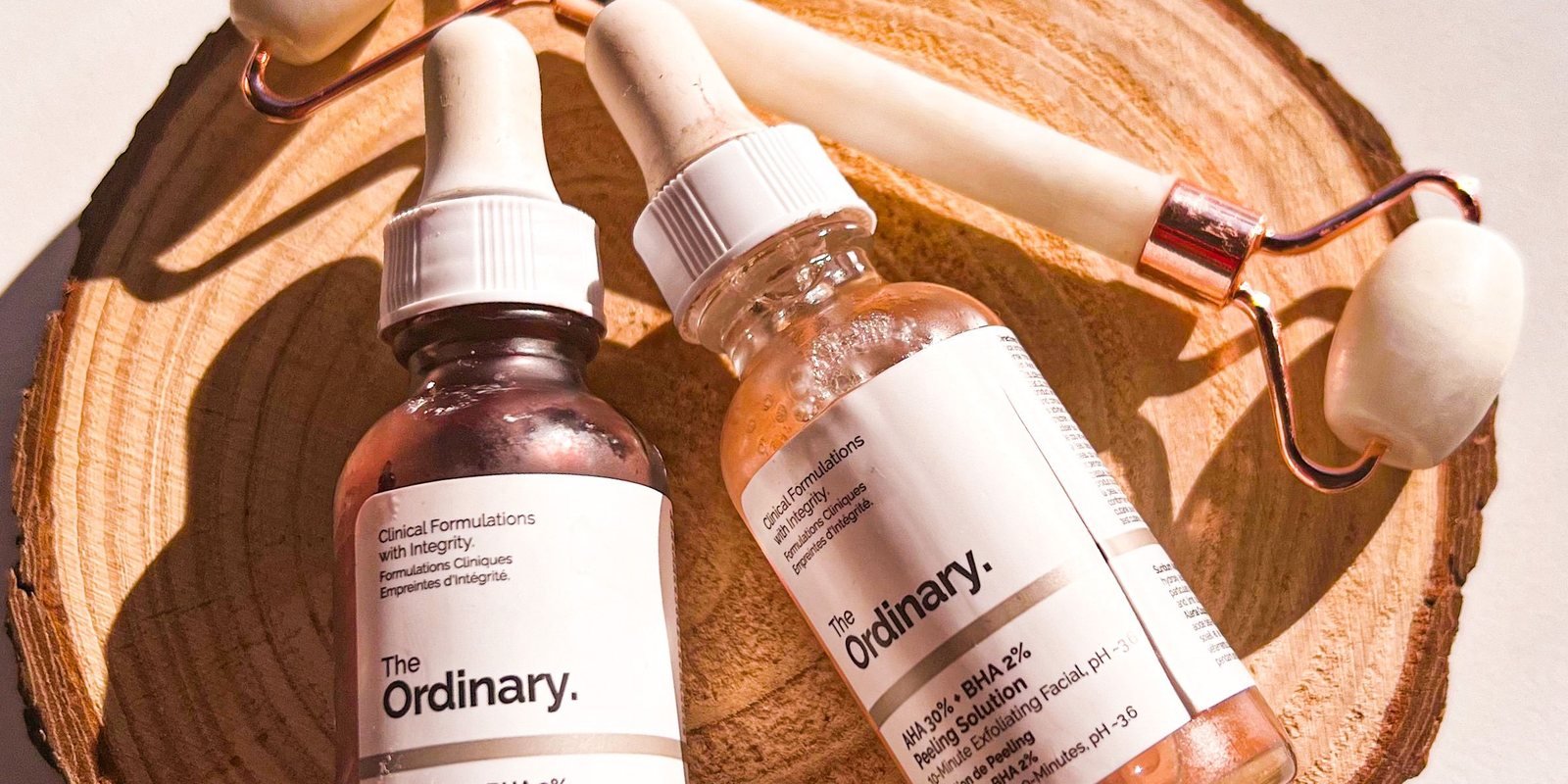
Peptide products worth buying
| Product | Price | Why it works |
|---|---|---|
| The Ordinary Multi-Peptide + HA Serum | $19.90 | The former Buffet, and the sensible first peptide serum. Multiple signal peptide complexes plus hyaluronic acid, at a price that makes a twelve-week trial affordable. Sits under moisturizer without pilling, which not all peptide serums manage. |
| The Ordinary Multi-Peptide + Copper Peptides 1% | $27.20 | GHK-Cu, the carrier peptide with the density-and-thickness trial behind it, at a fraction of what copper peptide serums usually cost. It has a faint blue tint that disappears on the skin. Use it at night and keep it away from direct vitamin C. |
| The INKEY List Peptide Moisturizer | $12.60 | The cheapest way to get peptides into a routine you will actually keep, because it replaces your moisturizer rather than adding a step. Light texture, so pair it with something richer at night if your skin is very dry. |
| The Ordinary Multi-Peptide Eye Serum | $25.00 | The peptide format that makes most sense around the eyes, where retinoids frequently cannot be tolerated at all. Expect improvement in crepiness and firmness, not in hollowing — no topical addresses volume loss. |
| Olay Regenerist Micro-Sculpting Serum | $21.18 | Amino-peptide complex with niacinamide in a formula that has been on the market long enough to have a track record. The most widely available option here, which counts for something when you want to replace it without waiting for delivery. |
Prices checked 22 September 2026 and they move.
Retinoids worth buying
| Product | Price | Why it works |
|---|---|---|
| The Ordinary Retinol 0.5% in Squalane | $9.30 | Retinol in squalane and nothing else. The cheapest serious retinoid, with graduated strengths so you can move up within one line. No soothing ingredients in the formula, so it is not the one for reactive skin. |
| CeraVe Resurfacing Retinol Serum | $16.49 | Encapsulated retinol with ceramides and niacinamide, which makes the first month tolerable. The default beginner recommendation across most dermatologist roundups. |
| RoC Retinol Correxion Night Serum Capsules | $12.99 | Single-dose capsules, which solves the commonest beginner error of applying far too much. Also keeps the retinol sealed away from air until the moment of use. |
| Olay Retinol Night Cream | $29.94 | Retinol, peptides and niacinamide in one moisturizer — the practical answer for anyone who wants both categories without running two routines. Being a cream rather than a serum makes it gentler and slower. |
| La Roche-Posay Retinol Face Serum | $35.24 | The pick for sensitive skin that still wants a retinoid, with glycerin, niacinamide and hyaluronic acid offsetting the drying. The most expensive here and the one least likely to be abandoned in week three. |
How to use both without irritating your skin
Peptides in the morning, under sunscreen. Retinoid at night, on dry skin, two nights a week to begin with, buffered with moisturizer underneath if your skin is reactive. That is the entire protocol.
Do not layer a peptide serum directly on top of a retinoid on the same night. There is no chemical incompatibility, but stacking anything on retinoid nights increases the odds of irritation, and irritation is what makes people quit. Keep the retinoid nights simple.
Copper peptides and direct vitamin C should be separated by time of day. The concern is oxidation of the copper complex rather than any risk to you, and morning-versus-evening handles it.
If you are starting both from scratch, start the peptide first. It is unlikely to cause a reaction, which means that when you add the retinoid four weeks later, anything that happens has one obvious cause.
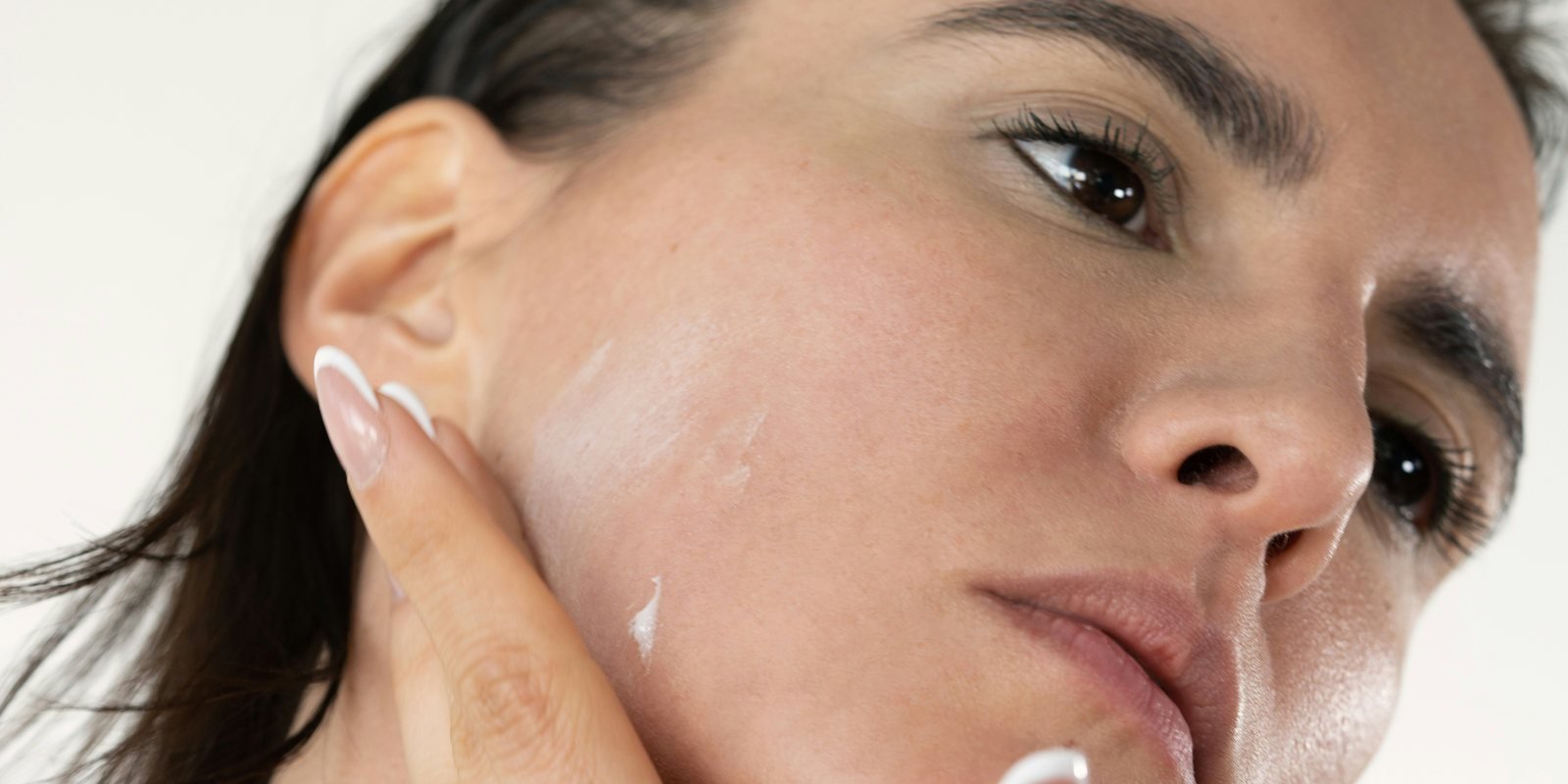
What to expect, and when
Peptides are slow and undramatic. Firmness and smoothness improve over eight to twelve weeks in the trials that report timelines, and the change is the kind you notice in a photograph rather than in the mirror. Nothing peels, which is the main appeal and also the reason people give up on them early — there is no feedback signal telling you it is working.
Retinoids give you feedback immediately, most of it unwelcome. Dryness and flaking peak in weeks two through four, texture improves around month two, and fine lines shift closer to months three through six. If you are new to it, our retinol beginner’s guide sets out what each week looks like.
Neither category does anything for volume loss, jowling, or deep static lines. Those are structural, and honestly, no cream reaches them. Anyone selling you a peptide as a needle-free alternative is selling something the trials do not support.
Who should skip which
Skip retinoids entirely if you are pregnant or breastfeeding, and peptides are the obvious substitute for that period. Skip them also if you have active eczema or a rosacea flare, at least until things are calm.
Skip peptides if your budget only stretches to one active and you can tolerate a retinoid, because you would be buying the weaker evidence at a higher price. And skip any peptide product marketed as a Botox alternative on the strength of that claim alone. The trials show a modest effect, the experts describe it as an adjunct, and the gap between that and the advertising is where most disappointment in this category comes from.
Questions people actually ask
Can peptides replace retinol completely?
For someone who genuinely cannot tolerate a retinoid, they are the best available substitute. For everyone else the substitution trades a strong evidence base for a weaker one, and the reason to make that trade is tolerance, not efficacy.
Do peptide supplements or collagen drinks do the same thing?
They are a different question with a different literature, and none of the topical evidence above transfers to them. Ingested collagen is digested into amino acids like any other protein.
Why do peptide products cost so much more than retinol?
Raw material cost and marketing, mostly. Retinol is a commodity ingredient made at scale, while branded peptide complexes are licensed. The $9 retinol and the $60 peptide serum are not priced according to how much either has been proven to do.
Is copper peptide safe to use long term on the face?
Topically, the safety record is good and it has been in cosmetic use since the 1970s. The caution in the research literature applies to systemic copper, taken internally, where excess copper is genuinely harmful. That is a different route of administration and not what you are doing with a serum.
How do I know whether a product has enough peptide to matter?
Frequently you cannot, which is a fair criticism of the category. Look for the peptide in the top half of the ingredient list, and prefer brands that state concentrations. Alexiades makes this point about Matrixyl specifically: the studies that showed it working used defined concentrations, and most labels do not disclose theirs.

I write TenaWorks for women who are past being sold miracles. Everything here is checked against what dermatologists actually say, tested against what a real routine can sustain, and written for skin that has some history behind it.
Written by Marie for TenaWorks. Product prices verified 22 September 2026 and subject to change. This article is general information, not medical advice.